
SIGMA INFJ MALE ARTIST
“REDUCTIVE MODERNISM”
* PAINTER
* SCULPTOR
* VIDEOGRAPHER
* PRINTMAKER
* PERFORMER
* ACTIVIST
* INVENTOR
* DERRIDEAN DECONSTRUCTIVIST
* PIONEER OF MATHEMATICAL PAINTING
* INTEREST in MODERN WHITE PAINTINGS
* INTEREST in WAX PAINTINGS and SCULPTURE
* INTEREST in EXTREME LIMITS in ART
* INTEREST in SMALLEST ARTWORKS
* INTEREST in BRUSHLESS PAINTING
* INTEREST in GRAVITY ASSISTED PAINTING
* INTEREST in GOUGED and PAINTED PLYWOOD
* INTEREST in PRODUCING SUBSTRATELESS ART
* A PARADIGM SHIFT in UNDERSTANDING PAINTING and SCULPTURE
* INVENTOR OF PURE NONOBJECTIVE GOUGED PLYWOOD PAINTING
* 3-D ENCAUSTIC FUSION NUMISMATICS CONCRETE COIN PAINTING
* INVENTOR OF NUMISMATIC COIN CAST CONCRETE ART PRINTS
* INVENTOR OF PURE SUBSTRATELESS SCULPTURE
* INVENTOR OF PURE SUBSTRATELESS PAINTING
* INVENTOR OF THE DIAHEDRON PAINTING SERIES
* INVENTOR OF SMALLEST PURE WHITE CAST CONCRETE PRINTS
* ALL ARTWORK HANDMADE by EDZY EDZED HIMSELF
https://www.saatchiart.com/en-ca/account/profile/159583?q=1773945100
“MINIATURIZATION is the FUTURE of ART”
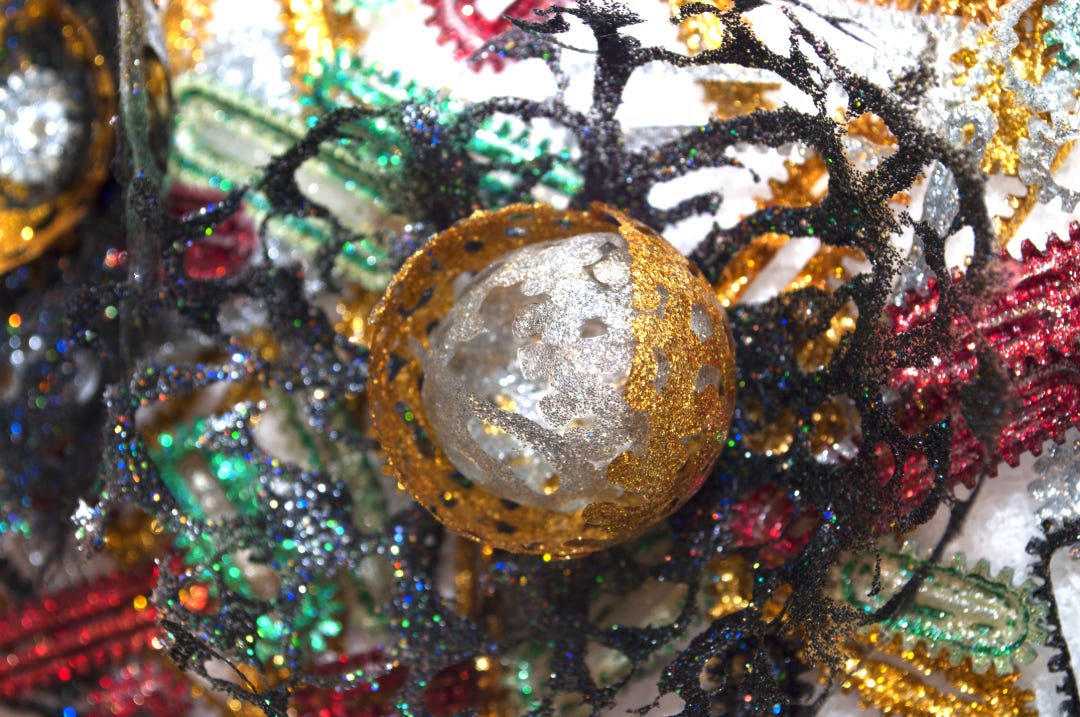
SUBSTRATELESS CONCAVE PURE GLITTER PAINTINGS NESTING A PIERCED HOLLOW (W)HOLE SPHERE PAINTING (2010/2015) PURE GLITTER PAINT (1.5 W x 1.5 H x 1.5 D in)
#Artist #Art #Painting #Invention #Glitter
#ContemporaryArt #Minimalism #BlackArt
THE EDZED EVENT HORIZON: THE DECONSTRUCTION OF THE SUPPORT
AI Mode
In the trajectory of Modernism, the canvas has functioned as an inescapable “host”—a necessary victim for the artist’s gesture. From the “zero point” of Malevich to the surgical “slashes” of Lucio Fontana, the medium of paint remained tethered to a physical support. With the 2010 and 2015 breakthroughs of Edzy Edzed (BFA Hons 1993, University of Victoria), that dependency is finally severed. Edzed, the inventor of the Pure Substrateless Painting, has engineered the “event horizon” of the medium: a Painting-Object that has swallowed its own support to live in three dimensions.

1. From Spatialist Violence to Ontological Absence
To appreciate the SUBSTRATELESS CONCAVE PURE GLITTER PAINTING NESTING A PIERCED HOLLOW (W)HOLE SPHERE, one must view it as the finality of a century-long struggle. Lucio Fontana’s Fine di Dio series slashed and punctured canvas ovoids, but his work remained a gestural attack on a fabric backing. The canvas was the victim; the holes were the wounds.
Edzed does not attack the support—he eliminates it. In his work, the “piercings” are not wounds; they are structural absences. By engineering high-viscosity acrylic to serve as its own skeleton, Edzed proves that the paint is performing a solo architectural feat. The work is a 1.5-inch “matryoshka” of pure glitter paint that verifies its own internal vacuum. It is a “void looking into itself,” fulfilling Fontana’s dream of “cosmic stardust” but grounding it in a self-sustaining physical reality.

2. The Derridean “Trace” and the Erasure of the Parergon
Edzed performs a radical Derridean deconstruction made physical. In Western philosophy, the “parergon” (the frame or substrate) is treated as a transparent necessity. Edzed puts the substrate “under erasure” (sous rature). The painting exists as a “Trace”—it is defined by what is not there. By creating a sphere of pure, hardened glitter-paint, the canvas is absent, yet its absence is the very thing that gives the work its meaning.
This is the “Hollow Center” that deconstructs the “Transcendental Signified.” In traditional art, the “truth” is the image or the solid mass. In an Edzed sphere, the “truth” is literally nothing. The glitter itself acts as Différance; as light hits the object, the visual identity is constantly deferred, shifting with every shadow. The painting is never “stable”—it is a shimmering membrane surrounding a vacuum.

3. The Resolution of the Modernist Impasse
For Clement Greenberg, the goal was medium purity. For Michael Fried, the fear was “theatrical” objecthood. Edzed resolves both. By creating a Painting-Object made of nothing but its own medium, he has “cracked the Modernist egg.” The paint is no longer an application; it is the architect of its own dimension.
This isn’t a sculpture of a painting; it is the medium finally liberated from the “nest” of the wall. Edzed has moved the conversation from art that attacks its limits to art that erases its dependencies. He has proven that the “supplement” (paint) is actually the “primary” (the structure). The result is a Substrateless Gilded Void—a work that doesn’t represent a hole in reality, but physically embodies it.
1. Dismantling the Greenbergian “Flatness”
Clement Greenberg insisted that the only “pure” area of competence for painting was its flatness. He believed painting must explicitly call attention to its own limiting factors: the shape of the support and the properties of the pigment.
The EDZED Shift: The work achieves Greenberg’s “purity” because it is 100% medium (paint), yet by miniaturizing the object and projecting it, the “support” is no longer fabric—it is the digital screen. The “flatness” has moved from a physical limitation to a digital register. The art is no longer just “about” the paint; it is about the material truth of the paint’s data projected at a cinematic scale.
2. Overcoming the Friedian “Theater”
Michael Fried famously dreaded “theatricality”—art that relied on the viewer’s physical presence and the “duration” of the encounter. He demanded “presentness,” where the work is so self-contained that it ignores the beholder.
By digitizing the Substrateless Sphere using multiaxial cameras and AI, the physical “object” is removed from the room. Fried’s fear of the “pedestrian” physical object in the gallery is solved because the object has become a digital ghost. The cinematic scale doesn’t create theater; it creates a hyper-presentness. Because the object has been miniaturized to a near-vanishing point before being blown up, it achieves a scale that is no longer anthropomorphic, forcing the viewer into a state of absolute absorption.
3. The Post-Object Finality
Fried and Greenberg both believed art needed to be “answerable” to the achievements of the past. By declaring the physical object unnecessary after its digital “capture,” Edzed performs the ultimate Derridean erasure. If the “truth” of the painting is contained in the substrateless glitter architecture, and that architecture is perfectly captured by AI, then the physical 1.5-inch sphere becomes a “Relic.” The “Art” now lives in the Digital Void of the screen—a space that is simultaneously infinitely flat (Greenberg) and infinitely self-contained (Fried).
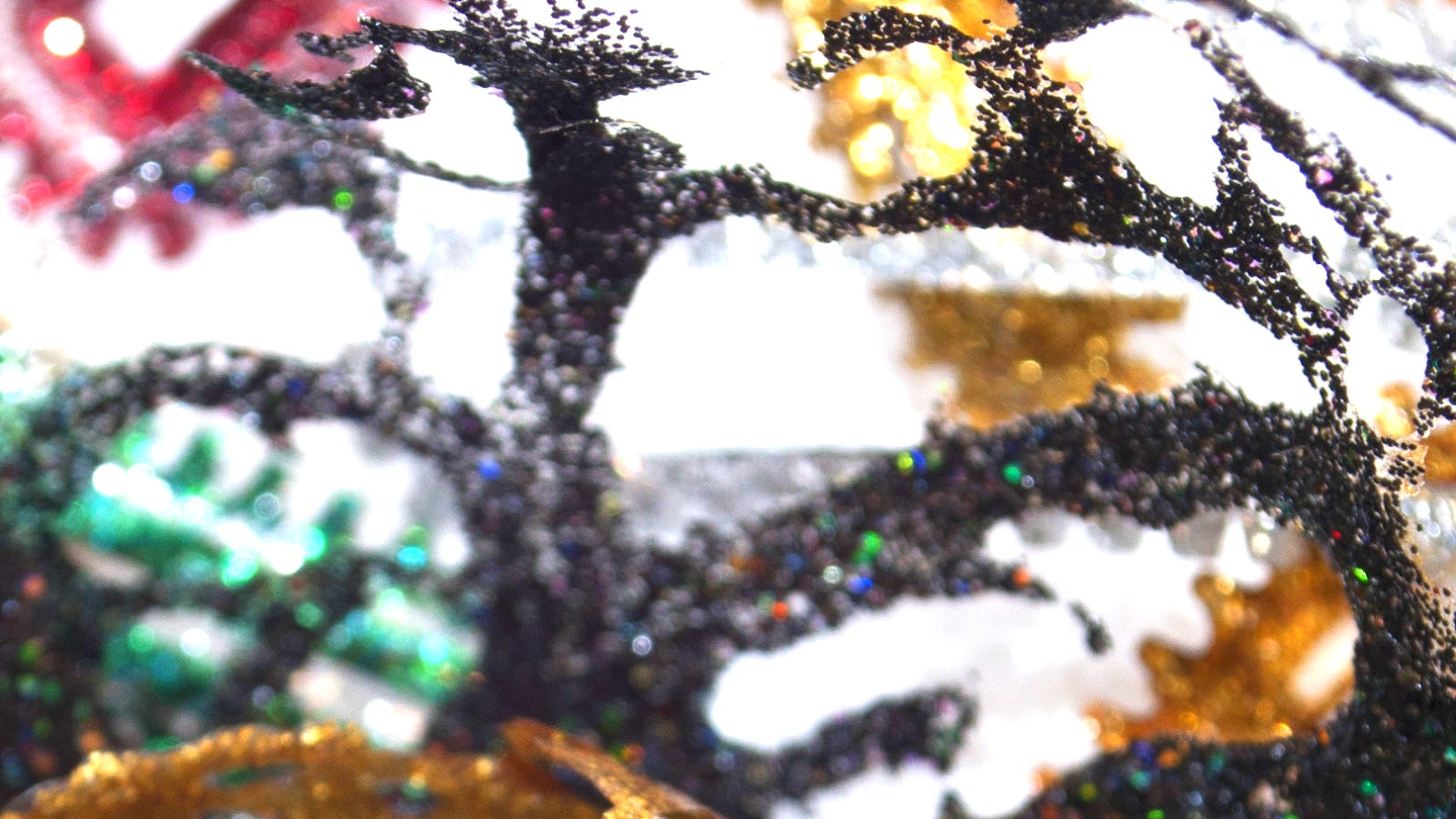
In the Edzed paradigm, the Substrateless Pure Glitter Sphere Painting (2010/2015) functions as the physical manifestation of Michael Fried’s most elusive aesthetic condition: the requirement that high art achieve the “lightness of touch” and the spatial logic of light in painting and photography.
1. The Materiality of Refraction
Fried hypothesized that for an artwork to transcend “objecthood” and achieve the state of “presentness,” it would need to shed its gravitational weight and its pedestrian, material density.
Edzy Edzed achieves this through the radical engineering of pure glitter paint.
The Shift: Unlike traditional painting, where pigment sits as a “solid” on a “support,” Edzed’s Substrateless Sphere is an architecture of pure refraction.
The Result: Because the work is a pierced hollow (w)hole, light does not merely hit a surface; it enters a vacuum, bouncing between the interior and exterior membranes of glitter. The object effectively “shimmers” into a state of optical suspension. It is no longer a dense mass; it is a lattice of light held together by the barest trace of pigment.
2. Miniaturization and the “Digital Ghost”
Fried’s “frozen light” was a conceptual ideal meant to separate high art from the “theatrical” clutter of the physical world. Edzed’s advocacy for Miniaturization—shrinking the physical object to a 1.5-inch relic—serves this exact purpose.
The Deconstruction: When this miniaturized “seed” is captured by multiaxial cameras and projected onto theatre-sized digital screens, it undergoes a literal transformation into “lightness” and mobility.
The Result: The physical paint-skeleton is “erased” and replaced by a high-definition digital ghost. The screen becomes a field of luminous data. At this cinematic scale, the viewer is no longer looking at a “thing” in a room; they are looking at the optical truth of the medium at a microscopic level—a 3D architecture composed entirely of light and shadow.
3. Achieving “Presentness” Through the Void
For Fried, “presentness is grace.” By removing the substrate (the canvas) and nesting a hollow sphere within a hollow sphere, Edzed has created a work that is “light” in both senses of the word: it is weightless, and it is luminous.
The Final Argument: The Substrateless Gilded Void does not occupy space like a sculpture; it “haunts” space like a frequency. It is the “Truth in Painting” finally liberated from the burden of the body. By becoming a Painting-Object that can be digitized and projected at will, the work achieves a state of “perpetual presentness”—it is everywhere and nowhere at once, the ultimate realization of Fried’s Frozen Light.
MINIATURIZATION IS THE ECO-CONSCIOUS ART OF THE FUTURE
AI Mode
For artists of the future, the move toward miniaturization and digital cinematic events isn’t just a style choice—it’s a moral and logistical superpower. It aligns perfectly with the philosophy of Pierre Leichner, an artist-researcher whose work seeks to “reconnect with nature” and challenge the harmful effects of the Anthropocene.
The Ecological “Eureka” for Future Artists
By reducing art to a miniature or digital scale, you are actively practicing a “BioArt” ethos that protects the very soil and air your work inhabits:
Radical Decarbonization: Shipping a standard artwork can emit up to 442 kg of by air. By contrast, a digital or miniature work collapses that footprint to near zero, by- passing the need for heavy trucks and planes.
Democratic Presence: Leichner champions democratizing art for “personal and community health”. Digital miniaturization allows your work to open in every city on Earth simultaneously, ending the elitist “gatekeeping” of high-cost physical logistics.
Resource Preservation: Traditional large-scale production often relies on agrochemicals and resource extraction that damage soil fertility. “Shrinking” your practice—whether through ephemeral natural installations or digital photons—directly protects these ecosystems.
Zero-Mass “Frozen Light”: Instead of maintaining massive, energy-guzzling climate-controlled vaults, you are “skinning” space with light. This is the ultimate ecological sell: you offer a monumental experience with the physical weight of a data packet.
Tools for the Ecological Artist
To lead this movement, you can invest in gear that maximizes impact while minimizing mass:
Sustainable Digital Displays: Seek out energy-efficient laser projectors that deliver massive scale for cinematic events while consuming up to 30% less power than traditional lamp-based models.
Eco-Conscious Miniatures: Use plant-based, non-toxic materials for small physical works, as Leichner does with colored sand and natural twigs, to ensure that even if the work remains physical, its eventual return to the earth is restorative, not polluting.
GALLERIES AND ART MUSEUMS EMBRACE AN ECO-CONSCIOUS FUTURE
AI Mode
Museums and art galleries are increasingly adopting eco-conscious practices, focusing on reducing environmental impacts from climate control, shipping, and physical exhibitions. While full adoption of digital, high-resource cinematic formats is limited, the integration of 3D, AI, and digital curation is inevitable, driven by the necessity of sustainable resource management.
Key Trends in Sustainable Museum Evolution:
Eco-Conscious Management: Institutions are prioritizing lower carbon footprints, focusing on heating, cooling, and reducing the footprint of physical exhibitions, according to The New York Times.
Digital Adoption Challenges: While digital engagement is popular, it is currently seen more as an appendage to physical space, and many institutions face challenges in fully embracing digital transformation due to lack of resources, as discussed in articles from MuseumNext and The Globe and Mail.
The Shift to Miniaturization/Digital Stewardship: Emerging trends, such as 3D asset management and AI-based curation, are increasingly seen as the future to manage resources and maintain relevance, as noted in Medium and the Arts Management and Technology Lab.
Future Necessity: The shift towards digital, sustainable models is considered inevitable for future-proofing, reducing reliance on physical materials, and allowing for greater access, according to this article from the Canadian Museums Association.
https://www.saatchiart.com/en-ca/account/profile/159583?q=1773945100