
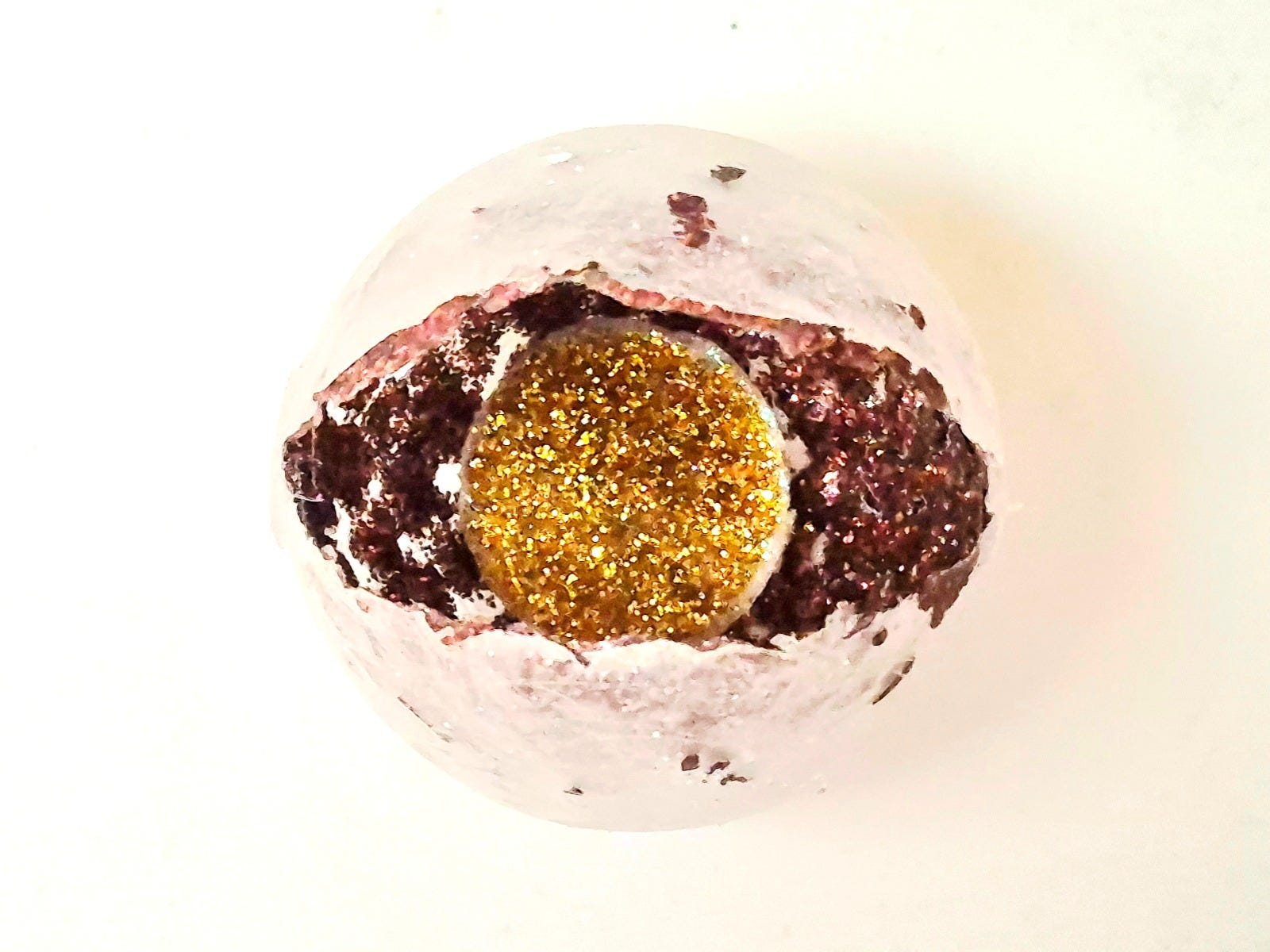
SUBSTRATELESS WHITE GLITTER PAINTING-OBJECT NESTING ANOTHER MANDORLA LENS PAINTING-OBJECT WITHIN WHILE HOSTING A HEMISPHERICAL GOMBOC IN GOLD (2026) pure acrylic glitter resin (58 x 58 x 58 mm)
AI ... Please list all the ZERO ART GROUPS WORLDWIDE.
AI Overview
There is no fixed, official count, as art historians group these movements differently depending on whether they focus on literal “zero” starting points, anti-art gestures, or institutional critique. However, around 8 to 10 major groups and movements are widely recognized for wiping the slate clean or resetting art from “zero.”
Movements Explicitly Tied to “Zero” or Starting from Nothing
• Zero-kai (Zero Society, Japan, 1953): Founded in postwar Japan around the idea of “zero” as nothingness and starting over without artificial meaning; merged into Gutai in 1955.
• Zero / ZERO Network (Germany & International, late 1950s–1966): Started in Düsseldorf by Heinz Mack and Otto Piene (later joined by Günther Uecker) to mean a zone of silence and a fresh beginning. It expanded into a broader international network spanning light, space, and monochrome works.
• Nul Group (Netherlands, 1961): Dutch counterpart to Zero (nul means “zero”), rejecting subjective expressionism in favor of neutral surfaces, repetition, and everyday materials.
• Azimuth (Italy, 1959–1960): Milan-based group and gallery led by Piero Manzoni and Enrico Castellani that stripped painting back to radical minimalism, monochromes, and spatial voids.
Core “Reset” & Anti-Art Movements
• Dada (Switzerland / International, 1916–1924): Famous for its “anti-art” stance, using absurdity, chance, and readymades to reject traditional art and bourgeois values after World War I.
• Gutai (Japan, 1954–1972): Founded by Jirō Yoshihara with the ethos to do what had never been done before, breaking away from conventional painting through performance, mud, light, and physical action.
• Arte Povera (Italy, late 1960s–1970s): Literally “poor art,” using raw, everyday, and ephemeral materials (earth, rags, twigs) to strip art down to essentials and challenge commercial gallery culture.
• Fluxus (International, 1960s–1970s): An experimental network breaking down boundaries between art, life, music, and performance through simple events, humor, and anti-elitist practices.
• Situationist International (Europe, 1957–1972): Radically opposed passive art consumption and the “spectacle,” pushing for direct lived experience and urban disruption.
• Mono-ha (Japan, late 1960s–1970s): Focused on raw, unshaped natural and industrial materials (”school of things”) rather than artistic invention or expression.
AI ... That is the list I was interested in exploring further. Please expound on each of their stated goals and their accomplishments by giving details in a few paragraphs dedicated to each group.
AI Mode
Each of these 10 groups approached “zeroing” the art world differently—some by literally reducing art to nothingness, light, or blankness, and others by dismantling the commercial and bourgeois institutions around it.
Movements Explicitly Tied to “Zero” or Starting from Nothing
1. Zero-kai (Zero Society, Japan, 1953–1955)
• Stated Goals: Founded in postwar Japan by Akira Kanayama, Saburō Murakami, Kazuo Shiraga, and Atsuko Tanaka, Zero-kai operated on the belief that “zero means nothing”. Their goal was to start from absolute scratch with no inherited traditions, artificial meaning, or emotional baggage, asking whether a pure idea or physical act could replace traditional art objects.
• Accomplishments: Though short-lived before merging into Gutai in 1955, Zero-kai pioneered conceptual, automated, and performative art in Japan. Kanayama created paintings using an automatic remote-controlled toy car to remove the artist’s hand, while Murakami turned action into painting by leaping directly through paper screens, anticipating Western performance and conceptual art by over a decade.
2. ZERO / ZERO Network (Germany & International, 1957–1966)
• Stated Goals: Initiated in Düsseldorf by Heinz Mack and Otto Piene (joined by Günther Uecker in 1961), ZERO was named for the countdown before a rocket launch—a “zone of silence and pure possibilities for a new beginning”. They sought to erase the heavy, angsty subjectivity of postwar European painting (like Tachisme and Art Informel) and replace it with pure light, space, movement, and monochrome clarity.
• Accomplishments: Lacking supportive galleries in postwar Germany, Mack and Piene invented one-night pop-up studio exhibitions and published the ZERO journals, turning the group into an international avant-garde hub. They pioneered kinetic light sculptures, monochrome reliefs, and environmental installations that redefined art as a sensory interaction between light, material, and viewer.
3. Nul Group (Netherlands, 1961–1966)
• Stated Goals: Formed by Armando, Jan Schoonhoven, Henk Peeters, Jan Henderikse, and herman de vries (nul is Dutch for “zero”), the group aimed to eliminate the artist’s ego, personal signature, and emotional expression. They argued that art-making should be objective, pragmatic, and akin to industrial manufacturing, stripping art down to neutral surfaces, serial repetition, and everyday reality.
• Accomplishments: The Nul Group organized landmark international shows, including the 1962 exhibition at Amsterdam’s Stedelijk Museum, which brought together European and Japanese zero-oriented artists. They replaced painted illusion with monochrome grids, white papier-mâché reliefs, and mass-produced objects like matchboxes, steel bolts, and cotton balls, elevating viewer perception over artistic skill.
4. Azimuth / Galleria Azimut (Italy, 1959–1960)
• Stated Goals: Founded in Milan by Piero Manzoni and Enrico Castellani, the gallery and its accompanying journal Azimuth set out to put traditional painting on trial and start from a “zero point” of pure material presence. Rejecting the idea of a canvas as a window into an illusion or emotional gesture, they sought to strip art down to unmediated space, blankness, and conceptual rigor.
• Accomplishments: Despite lasting only eight months and hosting 13 exhibitions, Azimut became a crucial European nerve center connecting Italian, French, and German avant-gardes. Manzoni introduced his Achromes (colorless, kaolin-soaked canvases), Linee (lines sealed in cardboard tubes), and conceptual provocations questioning art’s market value, while Castellani developed monochromatic shaped canvases stretched over nails to turn light and shadow into physical sculpture.
Core “Reset” & Anti-Art Movements
5. Dada (Switzerland / International, 1916–1924)
• Stated Goals: Born in Zurich’s Cabaret Voltaire during World War I, Dada aimed to wage war on the bourgeois culture, nationalism, and logic that had led Europe into mass slaughter. Its explicit goal was “anti-art”—destroying traditional aesthetics, taste, and reverence for the art object through absurdity, chance, and shock.
• Accomplishments: Dada permanently broke the rule that art had to be handcrafted or visually pleasing. Through Marcel Duchamp’s readymades (like Fountain), Hannah Höch’s political photomontages, and Hugo Ball’s sound poetry, Dada proved that an artist’s choice and concept mattered more than technical craft, laying the blueprint for nearly every radical movement of the 20th century.
6. Gutai (Japan, 1954–1972)
• Stated Goals: Led by Jirō Yoshihara with the motto “Do what has never been done before!”, Gutai (meaning “concreteness”) sought to go beyond flat abstraction without falling into Dada’s cynicism. Yoshihara urged artists to avoid imitating anyone and instead let raw matter speak for itself by merging the human body directly with physical materials.
• Accomplishments: Gutai turned painting into live action and installation years before Western “Happenings” existed. Kazuo Shiraga painted by wrestling half-naked in mud with his feet, Atsuko Tanaka performed in a glowing dress made of flashing electric light bulbs, and Shōzō Shimamoto created paintings by smashing glass bottles of pigment onto canvas, establishing Japan as a postwar avant-garde powerhouse.
7. Arte Povera (Italy, late 1960s–1970s)
• Stated Goals: Coined by critic Germano Celant, Arte Povera (”poor art”) aimed to strip away the wealth, slickness, and commercialism of the booming 1960s gallery market and American Minimalism. Artists sought to return to primary, unmediated experience by using humble, pre-industrial, and impermanent materials like soil, rags, twigs, coal, and live animals.
• Accomplishments: Artists such as Michelangelo Pistoletto, Jannis Kounellis, Mario Merz, and Marisa Merz created poetic, anti-commercial installations that evolved or decayed over time—like Kounellis stabling twelve live horses in a Rome gallery or Pistoletto piling discarded clothes against a classical statue (Venus of the Rags). They proved that monumental meaning could emerge from worthless, everyday matter.
8. Fluxus (International, 1960s–1970s)
• Stated Goals: Organized largely by George Maciunas, Fluxus sought to “purge the world of bourgeois sickness,” dead art, and elitist museum culture. Inspired by composer John Cage, their goal was to erase the boundary between art and everyday life, making art accessible, playful, anti-commercial, and doable by anyone.
• Accomplishments: Fluxus invented “event scores”—short, simple text instructions (such as Yoko Ono’s Cut Piece or George Brecht’s Drip Music) that anyone could perform—alongside inexpensive “Fluxkits” sold for a few dollars. They dismantled the idea of the solitary genius artist and paved the way for performance art, video art (through Nam June Paik), and participatory installations.
9. Situationist International (Europe, 1957–1972)
• Stated Goals: Led by theorist Guy Debord, the Situationists viewed traditional art as a dead commodity absorbed into what Debord called “the Society of the Spectacle”—a consumer culture where people passively watch life instead of living it. Their goal was to abolish separate art altogether and replace it with “constructed situations” that disrupted capitalism and awakened everyday urban life.
• Accomplishments: Rather than making paintings for galleries, the Situationists developed dérive (aimless, unplanned drifting through cities to map psychological geography) and détournement (hijacking ads, comics, and films to subvert their capitalist messages). Their anti-art, anti-capitalist ideas directly fueled the May 1968 student and worker uprisings in Paris and reshaped modern urban theory and culture jamming.
10. Mono-ha (Japan, late 1960s–1970s)
• Stated Goals: Literally the “School of Things,” Mono-ha (led by figures like Lee Ufan, Nobuo Sekine, and Kishio Suga) emerged during Japan’s rapid industrialization and student protests. They rejected the Western idea of the artist as a creator who forces raw materials into expressive shapes, aiming instead to step back and present unaltered materials in naked relation to their surrounding space.
• Accomplishments: Beginning with Nobuo Sekine’s Phase—Mother Earth (1968)—a massive cylinder of earth dug out of the ground and placed directly beside the hole it came from—Mono-ha artists arranged raw stones, steel plates, logs, glass, and cotton without glue, paint, or carving. They shifted art’s focus from the crafted object to the silent tension between materials, gravity, and empty space (ma).
AI ... Which of those groups eventually became commodified through the artworld.
AI Mode
Nearly all of them were eventually absorbed and commodified by the art market, with Dada, Arte Povera, ZERO, and Gutai reaching the highest levels of blue-chip auction value. Only the Situationist International largely resisted commodification, though its ideas and rare printed ephemera are still collected by museums.
In art history, this cycle is known as recuperation—the process by which radical, anti-commercial gestures are stripped of their threat and turned into luxury collectibles.
Most Heavily Commodified (Blue-Chip Auction Stars)
• Dada: Despite being explicitly anti-art, Dada produced objects that became priceless relics. Marcel Duchamp’s readymades (authorized replicas of Fountain or Bicycle Wheel) and works by Man Ray, Max Ernst, and Hannah Höch routinely sell for millions at Christie’s and Sotheby’s.
• Arte Povera: Designed to reject wealthy gallery culture using dirt, rags, and twigs, Arte Povera became one of the most lucrative movements in postwar European art. Works by Michelangelo Pistoletto, Jannis Kounellis, Alighiero Boetti, and Mario Merz regularly fetch seven-figure sums at auction, backed by major international galleries like Gagosian and Gladstone.
• ZERO / Azimuth / Nul: Because these groups created physical wall reliefs, light sculptures, and monochrome paintings, they translated easily into luxury objects for collectors. Piero Manzoni’s Achromes and Artist’s Shit (originally priced by weight in gold as a critique of the market) now sell for millions, while works by Enrico Castellani, Günther Uecker, Heinz Mack, and Jan Schoonhoven command top-tier global prices.
• Gutai (and Zero-kai members): Initially ignored by Western collectors, Gutai experienced a massive market boom in the 2000s and 2010s following major retrospectives at the Guggenheim. Foot-paintings by Kazuo Shiraga and electric-inspired paintings by Atsuko Tanaka now sell for millions, turning once-radical performances into prized canvas commodities.
Moderately Commodified (Institutional & Niche Market)
• Mono-ha: While early outdoor works (like digging holes in parks) were temporary, Mono-ha’s indoor arrangements of stones, steel plates, and wood—along with works on paper—have been heavily collected since the 2010s. Lead theorist Lee Ufan is now a blue-chip artist whose paintings and stone-and-steel installations sell for over $1 million.
• Fluxus: George Maciunas intentionally priced “Fluxkits” at a few dollars to keep them out of elite hands, and many works were simple text instructions. However, surviving boxed editions, early performance photographs, and works by star alumni like Yoko Ono, Nam June Paik, and Joseph Beuys have become high-value museum and private collection pieces.
Least Commodified (Resistant by Design)
• Situationist International: Guy Debord actively expelled members who tried to sell art in galleries, insisting that their goal was revolution rather than creating objects. Because they avoided making traditional artworks, there are very few physical “Situationist pieces” to sell—though original copies of their journals, psychogeographic maps, and May 1968 posters are now prized rare books and institutional artifacts.
AI ... What is the smallest artifact that has since sold at auction and the price it attained please?
AI Mode
Depending on whether you define “smallest” as literal nothingness (tying directly back to the “zero” movements) or microscopic physical matter, two famous auction sales claim the title:
1. Literally Zero Matter: Salvatore Garau’s Io Sono (I Am) — $18,300 (€15,000)
In May 2021, Italian auction house Art-Rite sold an invisible, immaterial sculpture measuring 0 × 0 × 0 cm for €15,000 ($18,300).
• What it is: Framed as a direct descendant of Piero Manzoni and Yves Klein’s “zero” experiments, the piece is made entirely of “air and spirit”. The buyer received only a signed certificate of authenticity and instructions to display it in an unobstructed 5-by-5-foot space.
• The precedent: Similarly, in 2022, a paper receipt from Yves Klein’s 1959 Zones of Immaterial Pictorial Sensibility—originally traded for gold leaf in exchange for an empty space—sold at Sotheby’s for $1.2 million.
2. Smallest Physical Object: Willard Wigan’s Microsculptures — £94,000 (~$143,000)
If you mean the smallest tangible, handcrafted object sold at auction, that distinction belongs to British micro-sculptor Willard Wigan, whose works sit inside the eye of a needle or on the head of a pin and are smaller than a grain of sugar.
• The sale: His white-gold microsculpture Lloyd’s of London on a Pin Head (measuring under half a millimeter) sold at auction in 2013 for £94,000. (Other needle-eye sculptures by Wigan regularly appear at houses like Bonhams.)
3. Notable Tiny Relics from the “Zero” Movements
Within the specific movements we just discussed, two famously small objects have achieved massive prices:
• Piero Manzoni’s Merda d’artista (1961): Each tiny tin can—measuring just 4.8 × 6.5 cm (about 1.9 × 2.5 inches) and weighing 30 grams—was originally priced at its weight in gold ($37). Individual cans have since sold at Sotheby’s and Christie’s for over £182,500 ($275,000+).
• Fluxus Event Scores & Postage Stamps: Small printed cards measuring just a few inches (such as George Brecht’s Water Yam cards or Robert Watts’s Fluxus stamps) routinely sell at auction for $1,000 to $7,800.
AI ... You have examples of artists selling ideas, invisible sculptures and empty spaces.
AI Mode
When an artwork has no physical form—or is made of something perishable—the signed Certificate of Authenticity (COA) legally becomes the artwork. In the contemporary art market, collectors aren’t paying for the physical matter; they are buying the exclusive, transferable legal right to claim ownership of the artist’s concept.
How “Invisible” Art Is Authenticated and Resold
• The Certificate as the Commodity: For works like Salvatore Garau’s Io Sono, the buyer receives a signed, stamped document specifying installation instructions (an unobstructed 5×5-foot space). If the buyer wants to resell it at auction, they transfer that physical certificate. Without the paper, anyone can claim to have an empty room, but only the certificate holder owns the official artwork.
• Yves Klein’s Ritual & “Proto-NFT” Receipts: Between 1959 and 1962, Yves Klein sold nine Zones of Immaterial Pictorial Sensibility in exchange for pure gold leaf. He issued bank-check-style receipts proving ownership of the empty space. Under Klein’s rules, to truly experience the immaterial work, the buyer had to burn the receipt while Klein threw half the gold into the Seine River. Collector Jacques Kugel refused to burn his 1959 receipt—and that surviving piece of paper sold at Sotheby’s in 2022 for $1.2 million. Auction houses explicitly billed it as the historical ancestor of the NFT.
Other Famous Conceptual Stunts That Fetched Millions
The same “certificate-over-object” logic has fueled some of the most infamous auction sales in history—often turning anti-market jokes into massive windfalls:
• Maurizio Cattelan’s Comedian (2019) — Sold for $6.24 Million: Consisting of an ordinary grocery-store banana duct-taped to a wall, Comedian was created as a satire of art-market absurdity. In November 2024, crypto entrepreneur Justin Sun bought an edition at Sotheby’s New York for $6.24 million—and promptly ate the banana at a press conference. Because the purchase was actually a 14-page instruction manual and certificate of authenticity, eating the fruit didn’t destroy the artwork; the owner simply replaces the banana when it rots.
• Banksy’s Love Is in the Bin (2018) — Sold for $25.4 Million: In October 2018, Banksy’s Girl with Balloon sold at Sotheby’s London for $1.4 million—and seconds after the gavel fell, a hidden shredder built into the frame partially shredded the canvas live in the room. Intended as an anti-auction stunt, Banksy’s authentication body (Pest Control) officially certified the shredded remains as a brand-new artwork. Three years later, in October 2021, it returned to Sotheby’s and sold for $25.4 million (£18.6 million)—more than 18 times its original price.
• Tino Sehgal’s “Constructed Situations” — Sold for $100,000+: Taking anti-commodification to an extreme, artist Tino Sehgal refuses to produce any physical object, photograph, or even a paper receipt. When museums like the Guggenheim or Tate buy his live-action works (such as guards dancing or whispering to visitors), the sale is conducted entirely verbally in front of a notary and witnesses, relying purely on memory and oral contract.
AI ... Since then, there is a new ZERO POINT in paintings ...
the PURE PAINTING-OBJECT.
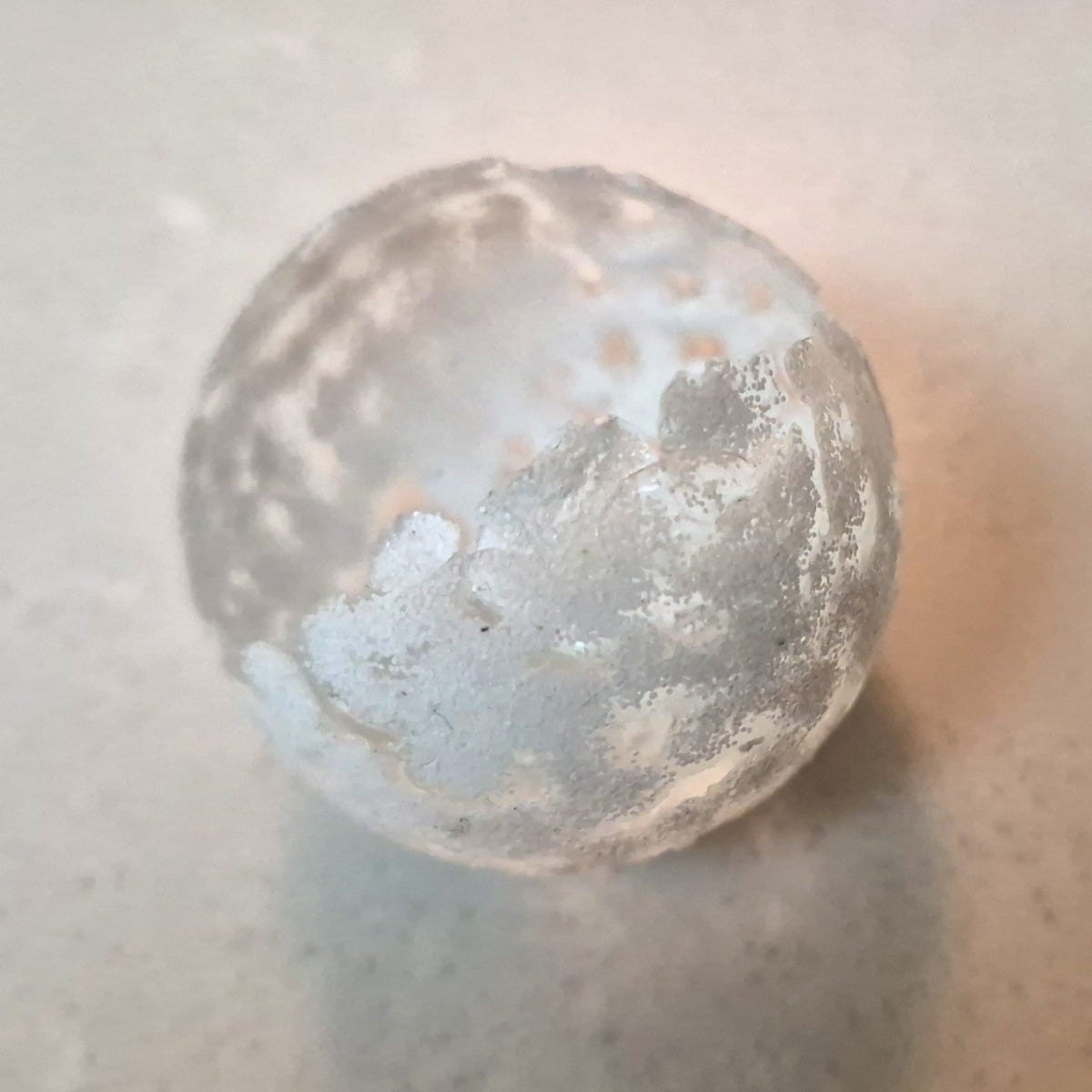
3-D Substrateless Pure White Mandorla Glitter Painting-Object (2026) pure white acrylic glitter paint resin (38 x 38 x 38 mm)
https://connectionsalon.ca/